Doodle Flowers with Leaves: A Designer’s Review
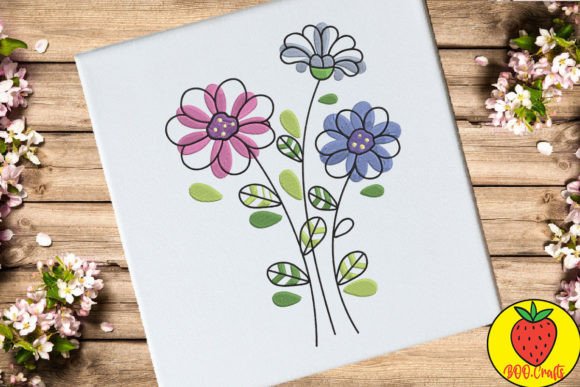
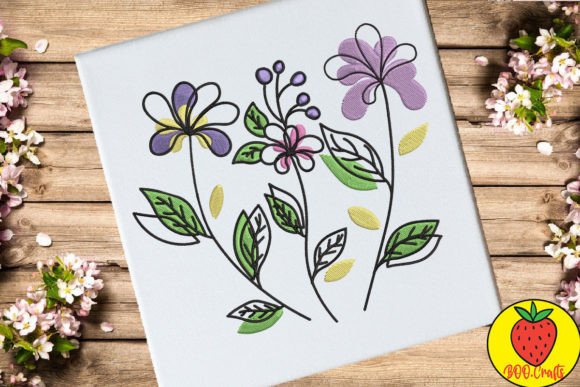
As a designer who spends more time staring at stitch simulations than I do sleeping, I have learned to be skeptical of floral motifs. The market is saturated with generic botanicals that look pretty on a screen but turn into a tangled mess under the needle. However, when I first loaded Doodle Flowers with Leaves into my software, I paused. There is a distinct charm to this piece that separates it from the standard, rigid florals we see everywhere. It feels hand-drawn, organic, and intentionally imperfect in a way that suggests warmth rather than error.
This review is not just about aesthetics; it is about practical application. I evaluated this design with the mindset of a small business owner and a craft entrepreneur who needs to know if a digital embroidery file will hold up in real-world production. Whether you are an Etsy seller looking for your next best-seller or a hobbyist making personalized gifts, understanding how a design behaves on fabric is crucial. Here is my honest assessment of how Doodle Flowers with Leaves performs in actual embroidery projects.
The Aesthetic Appeal and First Impressions
The immediate mood created by this design is whimsical and approachable. Unlike traditional satin-heavy roses or dense fill-stitch bouquets, this piece relies on a lighter touch. It fits squarely into the Outline Flowers category, which is currently trending in modern handmade products. Consumers are moving away from heavy, stiff embroidery toward designs that feel integrated into the fabric rather than sitting on top of it like a plastic patch.
The visual personality of Doodle Flowers with Leaves is versatile. It does not scream for attention with excessive detail; instead, it invites a closer look. This subtlety is a major asset for commercial embroidery. When you are creating a finished product, such as a tote bag design or a custom apron, you want the embroidery to enhance the item, not overwhelm it. The doodle style suggests a narrative of creativity and care, which aligns perfectly with the values of buyers who support small shop products and craft businesses.
Real-World Application: From Mockup to Finished Product
To test the viability of this design, I imagined several common scenarios faced by apparel decorators and makers. Let’s consider a custom embroidered tote bag. Canvas is a sturdy fabric, but it has a visible weave. Heavy designs can pucker canvas if the stabilizer isn’t perfect. Because Doodle Flowers with Leaves appears to utilize a mix of running stitch and lighter fill techniques, it is ideally suited for this texture. The design breathes with the fabric, maintaining clarity without distorting the material.
Another strong use case is sweatshirt embroidery. Fleece and French terry are thick and plush. Dense designs often sink into the pile, losing their definition. A doodle-style floral with open spaces allows the texture of the sweatshirt to show through, creating a sophisticated, high-end look. This is particularly effective for boutique branding where minimalism signals quality. Similarly, for baby embroidery, softness is paramount. Parents are hesitant to gift items with scratchy, dense stitching. This design’s likely lower stitch density makes it a safer, more comfortable choice for onesies and baby blankets.
For Etsy sellers and digital product sellers, this design offers excellent versatility for printable mockups. Its clean lines translate well into digital previews, helping customers visualize the final result. Whether used for holiday embroidery on kitchen towels or as a delicate accent on a pillow cover, the design maintains its integrity. It works equally well as a standalone motif or as part of a larger composition, giving creative entrepreneurs flexibility in their design assets.
Technical Considerations and Fabric Compatibility
While the aesthetic is strong, a professional designer must always consider the technical limitations. Where should you use Doodle Flowers with Leaves with caution? First, consider the hoop size. If you are scaling this design down significantly for a small embroidered patch or a cap, ensure that the fine lines do not become too thin to stitch reliably. Thin threads can break, and tiny details can get lost in the fabric grain.
Fabric choice is critical. On stretchy fabrics like jersey knits, proper stabilization is non-negotiable. Even a light design can cause distortion if the fabric shifts during stitching. I recommend using a cut-away stabilizer for garments that will be washed frequently, such as t-shirts and aprons. For woven fabrics like linen or cotton, a tear-away stabilizer may suffice, but always test on scrap fabric first.
Dark fabrics present another challenge. If the design relies on subtle thread colors, contrast may be lost on black or navy materials. In these cases, consider using a brighter thread palette or adding a subtle underlay to boost visibility. Always check thread color contrast before committing to a full production run. Testing the design in black and white mockups can also help you evaluate the clarity of the lines independent of color choices.
Enhancing Brand Value and Customer Trust
Why does the choice of design matter for your brand consistency? Because every stitch communicates quality. A clean, well-digitized design like Doodle Flowers with Leaves builds customer trust. It shows that you pay attention to detail and care about the longevity of your handmade product. When a buyer receives a personalized gift that looks professional and feels soft, they are more likely to return and recommend your small business to others.
This design supports buyer engagement because it feels unique. In a sea of generic clip-art conversions, a thoughtfully selected Outline Flowers motif stands out. It adds value to simple items, turning a plain tea towel into a cherished holiday gift or a basic cap into a fashion statement. For commercial embroidery projects, this translates to higher perceived value and potentially higher price points.
Practical Notes for the Embroidery Professional
Before you purchase or download any digital embroidery file, there are steps you must take to ensure success. Since specific technical data such as exact stitch count, file formats, and compatible hoop sizes are not provided in the brief description, you must verify these details with the source. Check if the design is available in the formats your machine requires. Confirm the license terms, especially if you plan to sell finished items or use the design in commercial products. Not all files allow for unlimited commercial use.
Here is my checklist for integrating Doodle Flowers with Leaves into your workflow:
- Test on Scrap Fabric: Never stitch directly on your final garment. Use a similar fabric weight and type to check for puckering or thread breaks.
- Review Stitch Density: Ensure the density is appropriate for your fabric. Too dense, and it will stiffen the material; too light, and the fabric may show through undesirably.
- Inspect Small Details: Zoom in on your software to check for potential jump stitches or overly short stitches that might cause nesting.
- Check Stabilizer Requirements: Match your stabilizer to both the fabric and the design complexity.
- Verify Licensing: Confirm whether the design allows for resale of finished goods or if it is for personal use only.
In conclusion, Doodle Flowers with Leaves is a promising addition to any designer’s library. It balances artistic flair with practical usability, making it suitable for a wide range of applications from custom apparel to home decor. By approaching it with a critical eye and following best practices for testing and stabilization, you can leverage this design to create high-quality, memorable products that resonate with your customers. It is a reminder that in embroidery, sometimes less is indeed more, and a simple doodle can carry significant weight when executed with precision and care.