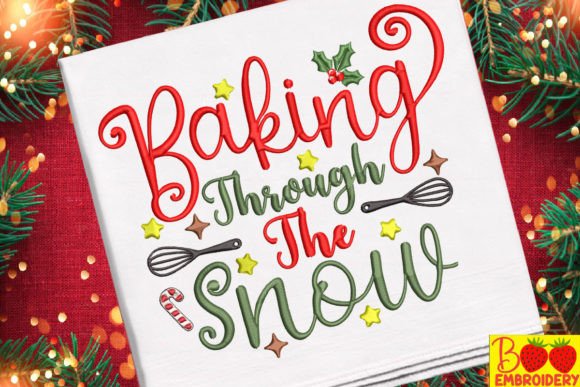
Baking Through the Snow: A Designer’s Review
As an embroidery designer who has spent countless hours hunched over hoops and navigating the chaotic energy of weekend craft fairs, I have learned that not every design translates into a bestseller. Some designs are technically impressive but visually quiet, while others possess that elusive "stop-and-look" quality that drives impulse buys. Recently, I downloaded Baking Through the Snow to evaluate its potential for my upcoming holiday market lineup. This machine embroidery design promises to be the perfect way to complement your Christmas embroidery projects, and after putting it through its paces on various substrates, I am ready to share my professional assessment.
First Impressions: Festive Warmth Meets Winter Whimsy
The title alone sets a specific mood. Baking Through the Snow suggests a cozy, narrative-driven aesthetic. It is not just a snowflake or a generic gingerbread man; it implies activity, warmth, and the contrast between the cold outdoors and the heated kitchen. Visually, the design feels rustic yet refined, leaning heavily into the modern farmhouse trend that continues to dominate the handmade product sector. It strikes a balance between cute and elegant, making it versatile enough for both children’s items and sophisticated home decor. For a craft fair booth, this emotional resonance is crucial. Customers do not just buy thread on fabric; they buy the feeling of a warm home during the holidays.
Product Versatility and Market Appeal
The true test of any digital embroidery file is its adaptability. A design that only looks good on one type of fabric is a liability for a small shop product line. Here is how Baking Through the Snow performs across different categories:
- Apron Embroidery: This is arguably the strongest application. An apron serves as a canvas large enough to showcase the details of the design without overcrowding. Placing the motif on the bib or the lower skirt creates a focal point that appeals to home cooks and holiday hosts. It transforms a standard utility item into a giftable keepsake.
- Tote Bag Design: Canvas tote bags are staples at craft fairs. The design works well here, provided it is scaled correctly. It adds a seasonal touch to a year-round item, encouraging buyers to purchase it as a dedicated "holiday grocery" or "gift wrapping" bag.
- Tea Towel Embroidery: Kitchen textiles are high-volume sellers. However, this requires careful attention to fabric texture. Terry cloth or waffle weave can distort fine details. I recommend using a smooth linen-cotton blend for the crispest result. The design acts as a charming accent that elevates a simple towel into a premium finished product.
- Embroidered Patch: If the design includes a satin stitch border or can be adapted with one, it makes for an excellent iron-on or sew-on patch. Patches are low-cost, high-margin items that allow customers to customize their own jackets or bags, expanding your reach beyond pre-made goods.
Production Practicality for the Etsy Seller
For those running an Etsy seller account or a boutique online store, efficiency is key. Baking Through the Snow appears to be designed with production in mind. The description notes that it comes with multiple sizes, which is essential for scaling from a small pocket detail on a onesie to a larger statement piece on a pillow cover. When evaluating a commercial embroidery asset, I always look for clean pathing and minimal jumps. While I cannot verify the exact stitch count without loading the file, the visual complexity suggests a moderate density that should not overwhelm lightweight fabrics.
Photography is another critical factor. This design, with its likely mix of whites, creams, and festive accent colors, photographs beautifully against neutral backgrounds. It creates high contrast in printable mockup scenarios, allowing digital sellers to create compelling listing images even before stitching a single thread. For handmade market products, visual clarity in photos translates directly to click-through rates.
Critical Technical Considerations
While the aesthetic appeal is high, practical execution requires diligence. As an experienced designer, I must highlight several areas where things can go wrong if you rush the process.
Fabric Texture and Stabilizer Choice
The success of this design hinges on the interplay between thread colors and fabric texture. On thick, textured towels, small details may get lost. I strongly advise using a cut-away stabilizer for stretchy fabrics like t-shirts or tote bags to prevent distortion over time. For woven fabrics like aprons, a tear-away may suffice, but testing is non-negotiable. Always test the design on scrap fabric first. Check how the stitch density interacts with the material. If the design is too dense for a lightweight cotton, it will pucker, ruining the professional look of your handmade product.
Scaling and Legibility
One common mistake is shrinking a detailed design too much. If Baking Through the Snow includes any lettering or intricate baking tools, ensure they remain legible at smaller hoop sizes. What looks clear on a 5x7 inch hoop may become a muddy blob on a 4x4 inch cap front. If you plan to use this on curved surfaces like caps, consider digitizing a version with reduced density or simplifying the underlay to accommodate the curve.
Thread Contrast
Thread selection can make or break this design. Since the theme involves snow and baking, there is likely a significant amount of white or light-colored thread. Using white thread on white fabric is a recipe for invisibility unless the texture of the stitches provides the contrast. Opt for cream, ivory, or soft pastels to ensure the design pops. Conversely, if the design features dark outlines, ensure they are thick enough to stand out against dark fabrics if you plan to offer black or navy options.
Boosting Booth Display and Brand Consistency
In a physical craft fair setting, Baking Through the Snow serves as a strong anchor for a themed display. Imagine a table draped in neutral linens, featuring embroidered pillows, hanging aprons, and stacked tea towels all featuring this motif. This repetition creates brand consistency and visual impact. It signals to the buyer that you are a specialized creator with a cohesive collection, rather than someone selling random unrelated items. This perceived value allows you to price your finished product higher, reflecting the curated nature of your work.
Furthermore, this design encourages bundle sales. A customer might buy a tea towel, but seeing the matching apron and pot holder set increases the average order value. It is a strategic asset for upselling during the busy holiday season.
Final Verdict and Licensing Notes
Before you begin batch production, remember to check the specific license terms included with the digital embroidery file. Most designers allow commercial use for physical finished products, but restrictions often apply to sharing the design assets themselves. Confirm whether you can use the design on items you sell at craft fairs and online shops. Additionally, verify the included file formats to ensure compatibility with your specific embroidery machine.
In conclusion, Baking Through the Snow is a robust addition to any holiday collection. It balances whimsical charm with practical applicability across a wide range of popular craft fair products. By paying attention to stabilizer choice, thread contrast, and appropriate scaling, you can transform this digital file into a standout bestseller. It captures the essence of the season, offering customers a tangible piece of holiday warmth that they will be proud to display in their homes.